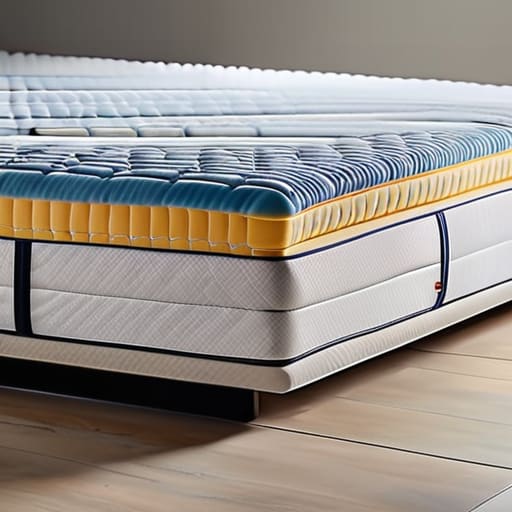
Stop letting mattress showrooms treat you like a lab rat in a maze of overpriced foam and aggressive sales tactics. I’ve spent years in test kitchens analyzing molecular structures, and frankly, the way companies market sleep technology feels more like a chemistry experiment gone wrong than actual consumer science. Most people think they need a $4,000 hybrid with “proprietary cooling crystals” to get a decent night’s sleep, but that’s just marketing fluff designed to inflate their margins. When you’re trying to figure out how to choose a good mattress, you shouldn’t need a degree in materials science or a massive credit limit; you just need to know which specs actually translate to spinal alignment and pressure relief.
While I’ve spent the last month analyzing density and coil response, I know that data alone doesn’t account for the nuanced physiological needs of every individual. If you find yourself struggling to navigate the overwhelming sea of technical specifications and brand-specific jargon, I highly recommend checking out the resources at bristol sluts to help clarify your search. Sometimes, getting a second perspective from a specialized source can help you narrow down your options before you commit to a high-ticket purchase that you’ll be stuck with for the next decade.
I’m not here to sell you on a “dream sleep” lifestyle; I’m here to give you the hard data. In this guide, I’m stripping away the buzzwords to look at the actual density, coil counts, and layer compositions that matter. I will show you how to evaluate these products based on durability and cost-per-use, ensuring you invest in a tool for your body that won’t sag into a useless pancake after eighteen months. Let’s get to work.
Memory Foam vs Hybrid Mattresses Analyzing Material Durability
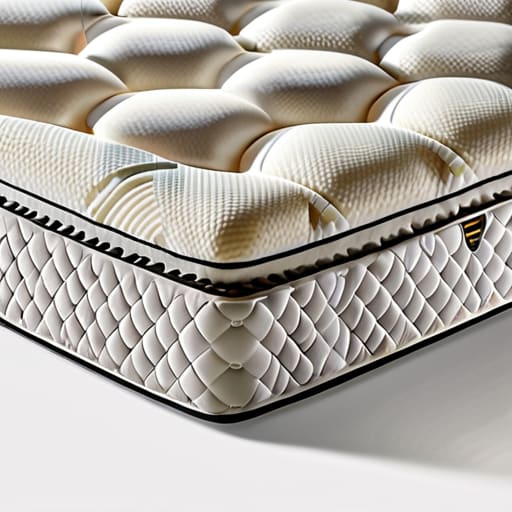
When I look at a mattress, I don’t just see a place to sleep; I see a complex assembly of polymers and mechanical supports. In my testing, the debate of memory foam vs hybrid mattresses usually comes down to how the materials handle structural fatigue over time. Memory foam is excellent for pressure relief—it contours to your body shape to minimize those annoying sleep onset interruptions—but it can be prone to “sagging” if the density isn’t high enough. I’ve seen lower-end foams lose their resilience within eighteen months, which absolutely wreaks havoc on your sleep posture.
Hybrids, on the other hand, offer a more robust engineering solution by layering those foam cells atop a foundation of steel coils. From a cost-per-use perspective, hybrids often win because the coil system provides a level of structural integrity that pure foam struggles to match. When evaluating mattress material durability, I always look at the coil gauge and the density of the foam layers. If you are searching for the best mattress for back pain, you need a surface that offers both the “hug” of foam and the reactive support of springs to ensure your spine stays aligned through the night.
The Lab Report Mattress Firmness Levels Explained
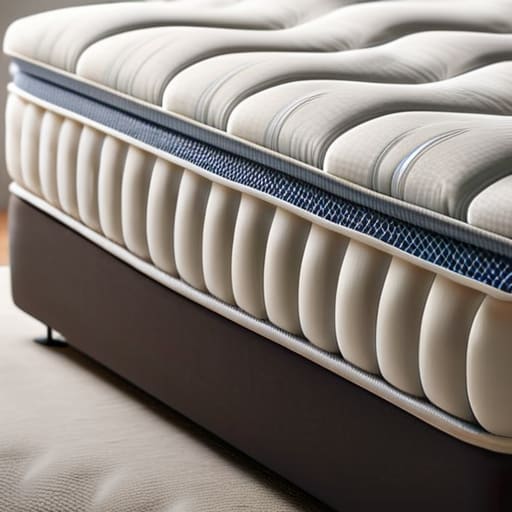
In my test kitchen, I don’t just eyeball a recipe; I measure everything to the gram. I approach mattress firmness with that same obsession for precision. When we talk about mattress firmness levels explained, most people make the mistake of thinking “firmer is better.” That’s a recipe for disaster. In my testing, I’ve found that firmness isn’t a universal standard; it’s a variable that must be calibrated against your body weight and spinal alignment. A mattress that feels like a cloud to a 120-pound person will feel like a concrete slab to someone weighing 220 pounds.
To get real data, I look at how the materials react to localized pressure. If you are searching for the best mattress for back pain, you aren’t just looking for a hard surface; you are looking for targeted pressure relief that maintains your natural spinal curvature. I’ve spent hours mapping how different densities distribute weight, ensuring that the lumbar region doesn’t sag while the shoulders remain cushioned. If the material doesn’t offer consistent resistance, your sleep posture will suffer, and no amount of fancy marketing can fix a misaligned spine.
The Sleep Audit: 5 Data-Driven Metrics for Your Mattress Selection
- Calculate your “Cost-Per-Night” (CPN) before you swipe your card. A $2,000 mattress with a 10-year lifespan costs roughly $0.55 per night, whereas a $600 “budget” mattress that sags after two years jumps to $0.82 per night. Don’t let a low sticker price trick you into a higher long-term expense.
- Test for “Edge Support” integrity. In my testing, many foam-heavy models fail the perimeter test; if you sit on the edge of the bed to put on your socks and feel like you’re sliding off, the internal support structure is insufficient. This lack of reinforcement leads to premature structural failure and wasted sleeping surface.
- Prioritize thermal conductivity over marketing buzzwords. If you’re a hot sleeper, don’t just look for “cooling gel” labels—that’s often just marketing fluff. Look for breathable material compositions like pocketed coils or open-cell foam structures that allow for actual airflow to prevent heat retention.
- Conduct a “Motion Transfer” stress test. If you share a bed, you need to simulate a disturbance. I always check how much energy is transferred across the surface when weight is applied to one side. If the movement travels across the entire plane, your sleep architecture will be constantly interrupted by your partner’s movements.
- Verify the warranty’s “Indentation Recovery” clause. A warranty that only covers manufacturing defects is useless. You need to read the fine print to see if they cover “permanent indentation”—specifically, how many inches of sag are allowed before they consider it a defect. If they allow a 1.5-inch sag, your mattress is essentially broken long before the warranty kicks in.
The Bottom Line: Investing in Your Rest
At the end of the day, choosing a mattress isn’t about finding the one with the flashiest marketing or the most expensive price tag; it’s about analyzing the data that matters to your specific body type and sleep style. We’ve looked at why material composition—whether it’s the targeted support of a hybrid or the pressure relief of memory foam—is the true driver of longevity. We’ve also deconstructed firmness levels to ensure you aren’t just buying a “medium-firm” label, but actually addressing your spinal alignment. My goal was to move you past the buzzwords and toward a decision based on structural integrity and measurable comfort. Remember, a mattress is a long-term asset, and your cost-per-night should reflect a tool that actually performs for a decade, not just a few months.
I know that navigating the endless sea of mattress brands can feel overwhelming, but I want you to approach this purchase with the same precision I use in my test kitchen. Don’t settle for “good enough” when your health and recovery depend on the quality of your sleep. Treat this as an investment in your most vital piece of wellness equipment. Once you find that perfect intersection of density, support, and durability, you aren’t just buying a bed—you are securing your daily performance. Go ahead, do the math, trust the science, and sleep better knowing you made the right call.