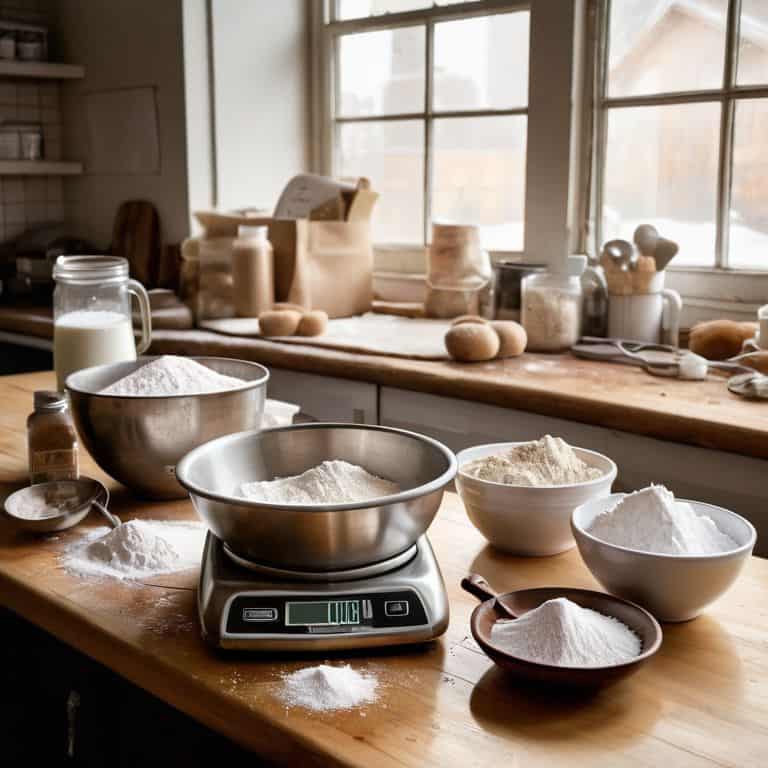
I still remember the first time I had to weigh my ingredients with precision in a professional kitchen. It was a game-changer for my baking, and I quickly learned that accuracy is key when it comes to producing consistent results. But when it comes to the question of do you need a kitchen scale for baking, I’ve found that many home cooks are unsure. Some may think it’s an unnecessary expense, while others may believe it’s a crucial tool. As someone who’s worked in a test kitchen and developed hundreds of recipes, I’ve seen firsthand the impact that a reliable kitchen scale can have on the final product.
In this article, I promise to cut through the hype and provide you with honest, experience-based advice on whether or not a kitchen scale is truly necessary for baking. I’ll share my own experiences, as well as the results of my rigorous testing, to help you make an informed decision. My goal is to give you the inside scoop on what really matters when it comes to do you need a kitchen scale for baking, so you can spend your money wisely and achieve the best possible results in your own kitchen. Whether you’re a seasoned baker or just starting out, I’m committed to providing you with practical, no-nonsense guidance that you can trust.
Table of Contents
Do You Need a Scale

As a meticulous baker, I’ve come to realize that accurate measurements are the backbone of successful baking. When I first started out, I relied on measuring cups, but I soon discovered that they can be notoriously unreliable. A simple mistake, like packing flour too tightly or scooping it too loosely, can throw off an entire recipe. That’s when I turned to a digital kitchen scale, and it’s been a game-changer. With a scale, I can ensure that my ingredients are measured precisely, which is especially crucial when working with delicate ratios of flour, sugar, and yeast.
In my experience, using a kitchen scale has helped me avoid common baking measurement mistakes. For instance, I used to struggle with converting between units, but now I can easily switch between grams and ounces with the touch of a button. This has been a huge time-saver, especially when working with complex recipes that require precise ingredient measurement. Plus, I’ve found that my baked goods are more consistent, with better texture and flavor.
By investing in a reliable kitchen scale, I’ve gained a new level of confidence in my baking. It’s allowed me to experiment with new recipes and ingredients, knowing that my measurements are spot on. Whether you’re a seasoned baker or just starting out, I highly recommend making the switch to a digital kitchen scale. Not only will it improve your baking, but it will also make the process more enjoyable, with less room for error and more time to focus on the fun parts – like decorating and devouring your creations!
Accurate Measurements Myth or Must Have
When it comes to baking, I’ve found that accurate measurements are crucial for achieving consistent results. A slight miscalculation can throw off the entire recipe, leading to disappointing textures and flavors. This is especially true when working with precise ratios of ingredients, such as in cake recipes or pastry dough.
In my experience, using a kitchen scale ensures precise measurements, which is essential for producing high-quality baked goods. By weighing ingredients instead of relying on volume measurements, I can guarantee that my recipes turn out as intended, with the right balance of flavors and textures.
Baking Measurement Conversion Simplified
When it comes to baking, one of the most significant advantages of using a kitchen scale is that it simplifies measurement conversion. No more worrying about whether you’ve correctly converted between cups and grams, or accidentally added an extra zero to your calculations. With a scale, you can just weigh out the ingredients and be done with it.
I’ve found that this simplicity is especially helpful when working with recipes that originated in other countries, where ingredients might be listed in unfamiliar units. By using a scale, I can easily convert metric measurements to whatever unit I’m most comfortable with, without having to do a bunch of mental math or consult a conversion chart.
Kitchen Scale for Baking

When it comes to baking, I’ve found that using a digital kitchen scale is a total game-changer. Not only does it make baking measurement conversion a breeze, but it also ensures that my ingredients are measured with precision. This is especially important when working with delicate recipes, where even a small mistake can throw off the entire balance of flavors and textures.
In my experience, one of the main benefits of using a kitchen scale for baking is that it eliminates the risk of common baking measurement mistakes. By weighing ingredients instead of relying on measuring cups, I can be sure that I’m using the exact right amount of flour, sugar, or butter. This is particularly crucial when it comes to recipes that involve precise ingredient measurement for baking, such as macarons or mille-feuille.
By investing in a reliable kitchen scale, home bakers can take their skills to the next level and produce consistently delicious results. In my next section, I’ll be sharing some of my favorite digital kitchen scale reviews and tips for getting the most out of this essential tool. Whether you’re a seasoned pro or just starting out, I’m confident that you’ll find that using a kitchen scale for baking makes all the difference in the world.
Benefits of Precise Ingredient Measurement
When it comes to baking, I’ve found that precise measurement is crucial for achieving consistent results. By using a kitchen scale, I can ensure that my ingredients are accurately measured, which in turn affects the final texture and flavor of my baked goods. This is especially important when working with ingredients like flour, which can be notoriously difficult to measure accurately using volume measurements.
Using a kitchen scale allows me to take advantage of consistent ratios, which is essential for producing high-quality baked goods. By measuring ingredients by weight, I can ensure that my recipes are scalable and that the proportions of each ingredient remain consistent, even when adjusting the recipe size. This attention to detail has been a game-changer for my baking, and I highly recommend it to anyone looking to improve their skills.
Digital Kitchen Scale Reviews Fact vs Fiction
When it comes to digital kitchen scales, I’ve found that accuracy is crucial for achieving consistent results in my baking experiments. A good scale should be able to precisely measure ingredients, taking the guesswork out of recipe conversion.
In my experience, reliable performance is what sets a great digital kitchen scale apart from a mediocre one. I’ve tested numerous models, and some have fallen short of their marketing claims, while others have become indispensable tools in my kitchen.
5 Essential Tips to Help You Decide if a Kitchen Scale is a Must-Have for Your Baking
- Start by assessing your current baking setup: take stock of the tools and equipment you already have, and consider whether a kitchen scale would be a worthwhile addition
- Consider the types of baked goods you typically make: if you’re frequently whipping up intricate pastries or delicate cakes, a kitchen scale may be indispensable for achieving precise measurements
- Think about your personal baking style: if you’re a meticulous planner who likes to measure ingredients down to the gram, a kitchen scale could be a game-changer – but if you’re more of a ‘throw-it-together’ kind of baker, you might not need one
- Look into the cost-benefit analysis: weigh the potential benefits of a kitchen scale against the cost, and consider whether there are other tools or equipment that could provide similar benefits at a lower price point
- Experiment with measuring ingredients by weight vs volume: try using a kitchen scale to measure out ingredients for a few recipes, and see if you notice a difference in the final product – this can help you decide whether a scale is truly necessary for your baking needs
Key Takeaways for the Discerning Baker
I’ve found that investing in a reliable kitchen scale is a total game-changer for achieving consistent flavors and textures in my baked goods
A digital kitchen scale can simplify measurement conversions and ensure accurate ingredient ratios, which is especially crucial for intricate recipes like croissants or multi-layer cakes
By prioritizing precise measurement and doing my research on the best kitchen scales for baking, I’ve been able to cut through the marketing hype and find tools that truly deliver value and performance in my own kitchen experiments
The Verdict on Kitchen Scales
For me, a kitchen scale is no longer a nicety, but a necessity – it’s the one tool that ensures my baked goods turn out consistently delicious, and I wouldn’t trade it for any other gadget in my kitchen.
Katherine "Kate" Reed
The Verdict: Weighing Your Options

As I conclude my thorough examination of the role of kitchen scales in baking, it’s clear that accurate measurements are the backbone of successful recipes. Through my tests and comparisons, I’ve found that a reliable kitchen scale can be a game-changer for home bakers, allowing for precise control over ingredients and, ultimately, consistent results. Whether you’re a beginner or an experienced baker, investing in a good kitchen scale can elevate your baking to the next level. By simplifying measurement conversions and ensuring accurate ingredient ratios, a kitchen scale can help you achieve professional-grade baked goods in the comfort of your own home.
In the end, the decision to use a kitchen scale for baking comes down to your personal approach to cooking and baking. If you value precision and consistency, and are willing to invest a bit of time and money into your craft, then a kitchen scale is an indispensable tool. As someone who’s passionate about helping home cooks make informed decisions, I encourage you to consider the benefits of a kitchen scale and take your baking to new heights. With the right tools and a bit of practice, you’ll be whipping up flawless croissants and perfectly balanced cakes in no time.
Frequently Asked Questions
What are the most critical ingredients in baking that require precise measurement with a kitchen scale?
For me, it’s all about the leavening agents, like baking powder and baking soda, as well as salt and sugar – precise measurements of these can make or break a recipe’s texture and flavor. I also swear by accurate measurements for yeast, as it can greatly impact rise and fermentation.
Can I really notice a difference in my baked goods if I use a kitchen scale versus measuring cups?
Honestly, I’ve seen a huge difference in my baked goods since switching to a kitchen scale. Precise measurements take the guesswork out of recipes, resulting in more consistent flavors and textures. I’ve tracked the results in my kitchen experiments spreadsheet, and the data shows a significant improvement in overall quality when using a scale versus measuring cups.
Are there any specific types of baking, such as cake decorating or artisanal bread making, where a kitchen scale is absolutely essential?
For intricate tasks like cake decorating or artisanal bread making, a kitchen scale is crucial. It ensures precise measurements, which is vital for achieving the perfect crumb or delicate sugar work. In these cases, a scale is not just a tool, but a necessity for consistency and quality.