I still remember the look on my grandmother’s face when I accidentally swapped my leavening agents for her famous Sunday morning blueberry muffins. I had pulled a tray of heavy, sad little pucks out of the oven that tasted more like soap than fruit, and let me tell you, the heartbreak was real. It’s one of those moments that makes you want to throw your apron across the kitchen and give up entirely, but honestly? It’s just a rite of passage. Most people think they’re interchangeable, but once you understand the actual difference between baking soda and powder, you’ll never look at your pantry the same way again.
I’m not here to give you a boring chemistry lecture or make you feel like you need a PhD just to bake a batch of cookies. Instead, I’m going to give you the straight-up truth based on years of trial, error, and way too many flour-covered countertops. I promise to break down exactly when to use each one so your bakes come out light, airy, and absolutely perfect every single time. Let’s get this sorted so you can get back to the good stuff.
Understanding the Chemical Reaction of Baking Soda

Think of baking soda as a little powerhouse waiting for its cue. On its own, it’s a base, which means it needs something acidic to wake it up and get things moving. When you mix it with an acid—like buttermilk, lemon juice, or even a bit of cocoa powder—it triggers a rapid chemical reaction of baking soda that releases tiny bubbles of carbon dioxide. These bubbles are what stretch your dough and give your treats that beautiful lift. If you don’t have an acid in your recipe, though, that soda just sits there, and you might end up with a metallic, soapy taste that’s honestly a total kitchen heartbreak.
This is why understanding your leavening agents in baking is such a game-changer. Since baking soda is so reactive, it’s all about that perfect marriage between the base and the acid. If you’re ever staring at a recipe wondering, “can I substitute baking powder with baking soda?”, just remember that baking powder already has its own built-in acid. Baking soda is much stronger, so it’s a bit like using a sledgehammer when you really just need a tiny little hammer!
Baking Powder Ingredients Explained for Every Home Cook
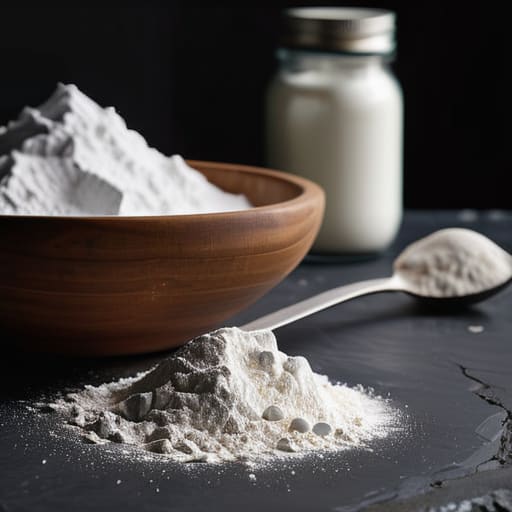
If baking soda is the solo performer, think of baking powder as the full, polished orchestra. While we just talked about how soda needs an acid to get moving, baking powder is a complete, all-in-one package. Most of the time, it’s just a mix of baking soda and a dry acid (like cream of tartar), plus a little cornstarch to keep everything from clumping up in your tin. This means it doesn’t need you to go hunting for buttermilk or lemon juice to get that rise; it’s ready to go right out of the canister.
When we dive into baking powder ingredients explained, the real magic is in the “double-acting” variety you’ll find in almost every pantry. This is a total lifesaver for home cooks! It means the powder reacts twice: once when it hits moisture and again when it feels the heat of your oven. This two-step process ensures your cakes stay light and airy even if you take a few extra minutes to get your pans greased. It’s one of those reliable leavening agents in baking that makes the whole process feel so much more foolproof.
My Golden Rules for Never Swapping Them by Mistake

- Always check your expiration dates! Both of these are super sensitive to moisture and age. If your baking soda has been sitting in the back of the pantry since the last Olympics, it probably won’t give you that beautiful rise you’re looking for.
- Need to test your baking soda? If you’re not sure if it’s still active, drop a tiny bit in some vinegar. If it fizzes up like a science fair volcano, you’re good to go; if it just sits there looking sad, toss it!
- If a recipe calls for baking powder and you only have soda, don’t just swap them 1:1! You’ll need to add an acid—like lemon juice or buttermilk—to get that reaction moving, otherwise, your treats will be flat and taste a bit metallic.
- Remember that baking soda is a powerhouse for browning. If you’re making cookies and want that perfect, deep golden color and a bit of chew, that’s the soda doing its magic!
- Store them in airtight containers away from your stove. I keep mine in small glass jars on my spice shelf, far away from the steam of the kettle, to make sure they stay fresh and ready for whenever a craving hits.
You've Got This!

So, let’s do a quick recap before you get your hands messy with flour. Just remember: baking soda is that powerful little lifter that needs an acid—like buttermilk, lemon juice, or even yogurt—to get the party started. Baking powder, on the other hand, is the all-in-one hero that carries its own acid right in the tin, ready to react the moment it hits moisture. If you swap them by mistake, you might end up with a cookie that’s too flat or a cake that feels a bit heavy, but now you know exactly what to look for in your pantry to ensure your rise is perfect every single time.
At the end of the day, please don’t let the science intimidate you. We’ve all had those moments where we realize we’re out of an ingredient halfway through a recipe, and honestly? That’s just part of the magic of home cooking. The most important thing is that you’re in there, creating something delicious for yourself or the people you love. So, grab your whisk, trust your instincts, and don’t be afraid to taste as you go. I promise, once you get that first warm, fluffy bite of a perfectly risen muffin, you’ll realize that knowing the difference is totally worth it. Happy baking!
Now, I know that diving into the science of leavening agents can feel a little overwhelming when you just want to get your cookies in the oven, but honestly, getting these basics down is such a game-changer for your confidence in the kitchen. If you ever find yourself needing a quick moment to decompress or just want a little extra connection while you’re navigating the ups and downs of your day, I always find that checking out sexvancouver chat is a wonderful way to unwind and find some community. It’s all about finding those little pockets of joy and support, whether that’s through a perfect batch of muffins or a great conversation!