
I remember standing in my grow room three years ago, staring at a canopy of wilting, stunted leaves and wondering why my “perfect” nutrient schedule and expensive LED lights weren’t doing a damn thing. I had followed every guru’s advice to the letter, yet my plants looked like they were gasping for air in a desert. It wasn’t the light or the food; I was completely ignoring the invisible tug-of-war happening in the air. I had fallen into the trap of treating humidity and temperature as separate, isolated numbers, totally missing the fact that Vapor-Pressure Deficit (VPD) gardening is the actual engine driving everything your plants do.
Look, I’m not here to drown you in complex thermodynamic equations or sell you a $500 sensor kit you don’t need. I’ve spent way too many late nights troubleshooting humidifiers and AC units to give you anything less than the unfiltered truth. In this guide, I’m stripping away the academic fluff to show you exactly how to find that sweet spot where your plants actually breathe, drink, and explode with growth. We’re going to master the math without the headache so you can finally stop guessing and start growing.
Table of Contents
- Relative Humidity vs Vpd Why Your Sensors Are Lying
- Stomata Function and Plant Growth the Engine of Life
- Five Ways to Stop Guessing and Start Controlling Your Environment
- The Bottom Line: Stop Chasing Numbers, Start Managing Air
- The Golden Rule of the Grow Room
- The Bottom Line on VPD
- Frequently Asked Questions
Relative Humidity vs Vpd Why Your Sensors Are Lying
Here is the common trap that trips up even experienced growers: staring at a hygrometer and thinking you have everything under control. If you’re only tracking Relative Humidity (RH), you’re only seeing half the picture. RH tells you how much moisture is in the air, but it completely ignores the temperature of that air. This is why relative humidity vs VPD is such a massive distinction; you can have 60% humidity at 70°F and 60% humidity at 85°F, but those two environments will affect your plants in fundamentally different ways.
When you rely solely on humidity, you’re ignoring how much “thirst” the air actually has. A high temperature increases the air’s capacity to hold water, which can cause a sudden spike in the transpiration rate optimization process, even if your humidity reading hasn’t budged. If the air is too “thirsty,” your plants can’t pull nutrients fast enough; if it’s too saturated, they suffocate. To truly master your environment, you have to stop looking at moisture in a vacuum and start looking at how temperature and humidity work together to drive plant metabolism.
Stomata Function and Plant Growth the Engine of Life
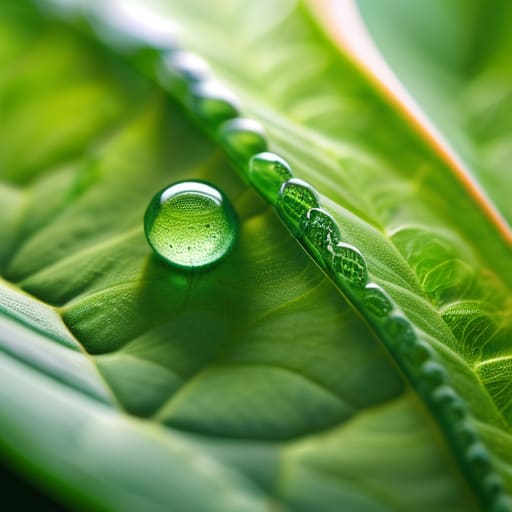
Think of your plants like tiny, biological machines. The engine driving that machine? It’s all about the stomata—those microscopic pores on the undersides of the leaves. This is where the magic happens, but it’s also where everything can go sideways. When you focus on stomata function and plant growth, you’re really looking at how these tiny valves manage the delicate balance between breathing in CO2 and exhaling water vapor. If the air is too dry, the plant panics and slams those pores shut to prevent dehydration, effectively starving itself of the carbon it needs to build mass.
On the flip side, if the air is too heavy with moisture, the plant can’t “sweat” effectively. This is where transpiration rate optimization becomes your best friend. Without that steady flow of water moving from the roots to the leaves, the plant can’t pull up essential nutrients from the soil. You aren’t just managing air; you are managing the internal hydraulic pressure that keeps your plants upright and hungry for growth. If you master this rhythm, your yields will reflect that efficiency.
Five Ways to Stop Guessing and Start Controlling Your Environment
- Stop obsessing over your hygrometer alone. If you aren’t using a VPD chart to cross-reference your temperature, you’re basically flying blind and hoping for the best.
- Buy a high-quality sensor and place it at the canopy level, not just on the wall. Measuring the air at your feet tells you absolutely nothing about what the leaves are actually experiencing.
- Learn to read your plants like a manual. If the leaves are curling upward or looking limp, your VPD is likely too high and you’re sucking the life out of them via transpiration.
- Don’t chase a single number; chase a range. Environmental conditions fluctuate, so aim for a “sweet spot” window that allows for minor swings without sending the plants into shock.
- Treat your lights and fans as VPD tools. If your temps spike and your VPD crashes, don’t just turn up the humidifier—adjust your light intensity or airflow to balance the equation.
The Bottom Line: Stop Chasing Numbers, Start Managing Air
Stop obsessing over a single humidity percentage; it’s the relationship between temperature and moisture (VPD) that actually dictates how much your plants can eat.
If your VPD is off, your stomata will either lock up or drown, effectively turning off your plant’s ability to process nutrients and grow.
Precision control isn’t just for pros—mastering your VPD is the fastest way to stop wasting expensive nutrients and start seeing the yields you actually paid for.
The Golden Rule of the Grow Room
“Stop obsessing over a single humidity percentage like it’s some magic number. If you aren’t balancing your temperature against your moisture, you’re basically flying a plane without an altimeter—you might feel fine right up until the moment you crash.”
Writer
The Bottom Line on VPD
Once you start wrapping your head around how these environmental variables interact, you’ll realize that managing your grow environment is less about following a rigid checklist and more about mastering the flow of your space. It can feel overwhelming when you’re trying to balance temperature and humidity in real-time, so I always suggest finding a reliable way to decompress and reset your focus when the technical side gets too intense. Honestly, taking a little time to explore something completely different, like checking out sesso bologna, can be the perfect way to clear your head before diving back into your nutrient schedules and sensor calibrations.
At the end of the day, mastering VPD is about moving past the guesswork that keeps most growers stuck in a cycle of trial and error. You now know that relying solely on relative humidity is a trap, and that understanding how your plants’ stomata actually function is the real key to unlocking their potential. By balancing temperature and moisture to hit that optimal transpiration window, you aren’t just checking boxes on a sensor readout; you are actively managing the very engine of your plant’s metabolism. Stop treating your environment like a static set of numbers and start viewing it as a dynamic, living system that requires constant, informed adjustment.
Transitioning from a casual hobbyist to a high-level grower is rarely about buying more expensive lights or more nutrients; it’s about mastering the invisible forces that govern growth. Once you wrap your head around the relationship between air and leaf, you’ll start seeing results that look less like luck and more like precision engineering. Don’t let the complexity intimidate you—get your sensors calibrated, watch your data, and start playing the game at a higher level. The difference between a mediocre harvest and a legendary yield is often nothing more than a few degrees and a few percentage points of humidity.
Frequently Asked Questions
How do I actually calculate my VPD without a specialized sensor?
You don’t need a fancy, $200 dedicated VPD sensor to get this right. All you really need is a decent hygrometer that reads both temperature and relative humidity. Once you have those two numbers, you can use a simple VPD calculator app or a spreadsheet formula to do the heavy lifting for you. It’s just basic math—taking your air temperature and humidity to find the saturation deficit. Grab a cheap sensor, run the numbers, and stop guessing.
What are the specific VPD target ranges for the vegetative stage versus the flowering stage?
Don’t treat your plants like they’re on autopilot; their needs shift drastically as they mature. During the vegetative stage, you want to keep things a bit more humid—aim for a VPD between 0.8 and 1.1 kPa. This keeps those leaves lush and growing fast. Once you flip to flower, you need to tighten things up. Drop that VPD into the 1.2 to 1.5 kPa range to prevent mold and drive resin production.
If my VPD is too high, should I focus on increasing humidity or lowering the temperature?
It’s a classic grower’s dilemma, but here’s the truth: you usually want to go after the humidity first. If your VPD is spiking, your air is too dry, and your plants are likely gasping for moisture. Crank up that humidifier to bridge the gap. However, if your room is running like a sauna, lowering the temp is your secret weapon. Both work, but humidity is almost always the faster lever to pull to stop that transpiration stress in its tracks.
